
Example 1: Small/Medium system with Pure LAN or DECT-LAN mixed synchronisation
Here are some example scenarios.
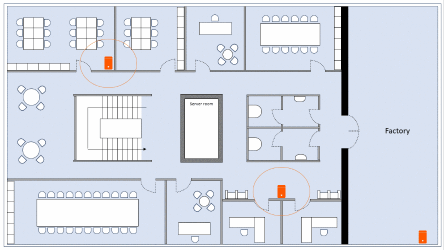
- The customer environment blocks the DECT signal between the Office and the Factory
- DECT synchronisation can't be used between the Office and the Factory
Pure LAN synchronisation.
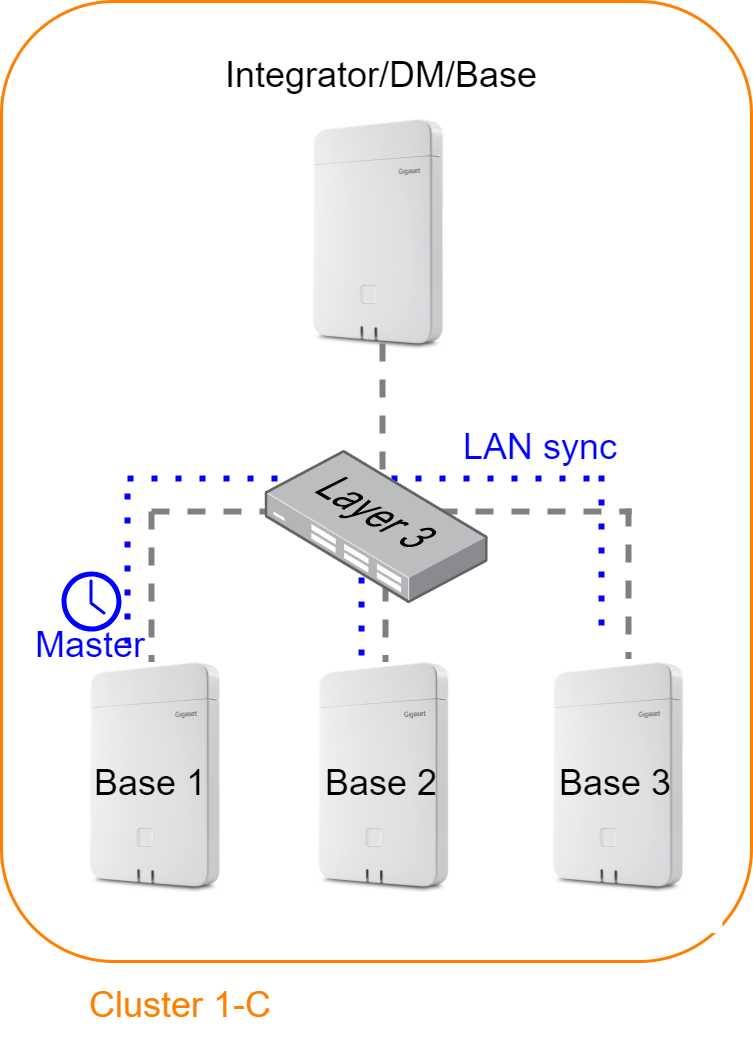
- Cluster 1-c is created to insure handover, roaming and load balancing
- One device is configured as LAN master
- The other DECT base stations are configured as Sync slave LAN
- DECT level has no relevance for pure LAN synchronisation
- Handover and roaming is possible within the whole DECT environment
- That LAN sync is used, does not mean that DECT signal range is not important
DECT system configuration
DECT-LAN Mixed.
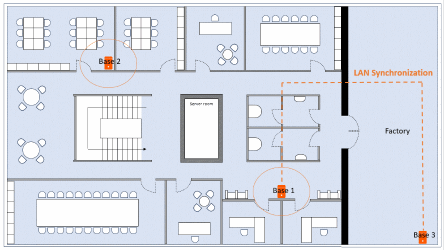
- Use such a configuration, if your environment is mainly able to synchronize via DECT but there are particular circumstances which cannot always guarantee reliable DECT synchronisation, e.g., a passage through a fire door
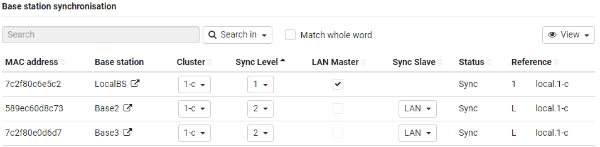
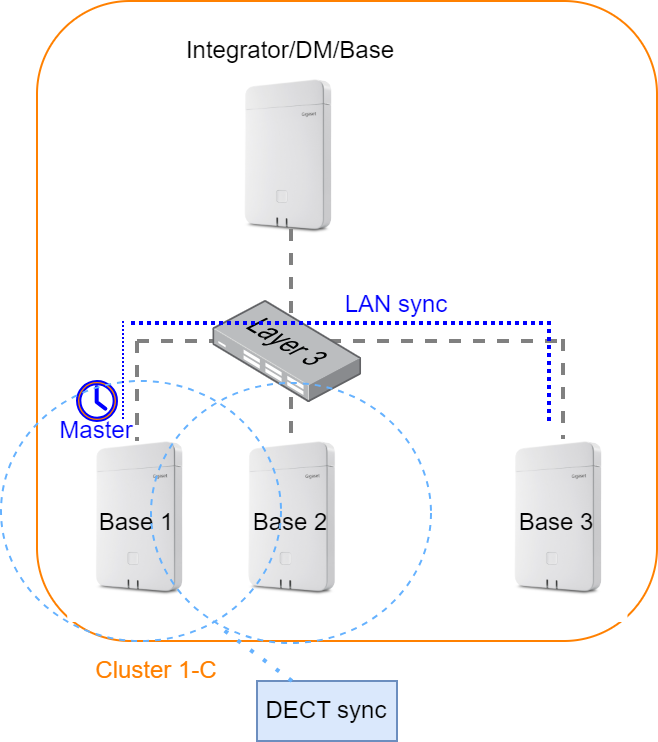
- Cluster 1-c is created to insure handover, roaming and load balancing
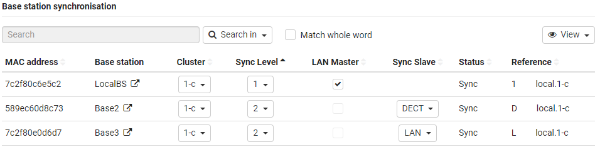
- Base station 1 in the center is DECT level 1 to reduce the amount of sync levels
- Base 1 with DECT level 1 is configured as LAN master
- For each base lower than the LAN master you can individually decide whether it should be synchronised via DECT or LAN
- Base 2 is synchronised via DECT and has DECT sync level 2
- Base 3 is synchronised via LAN
DECT system configuration
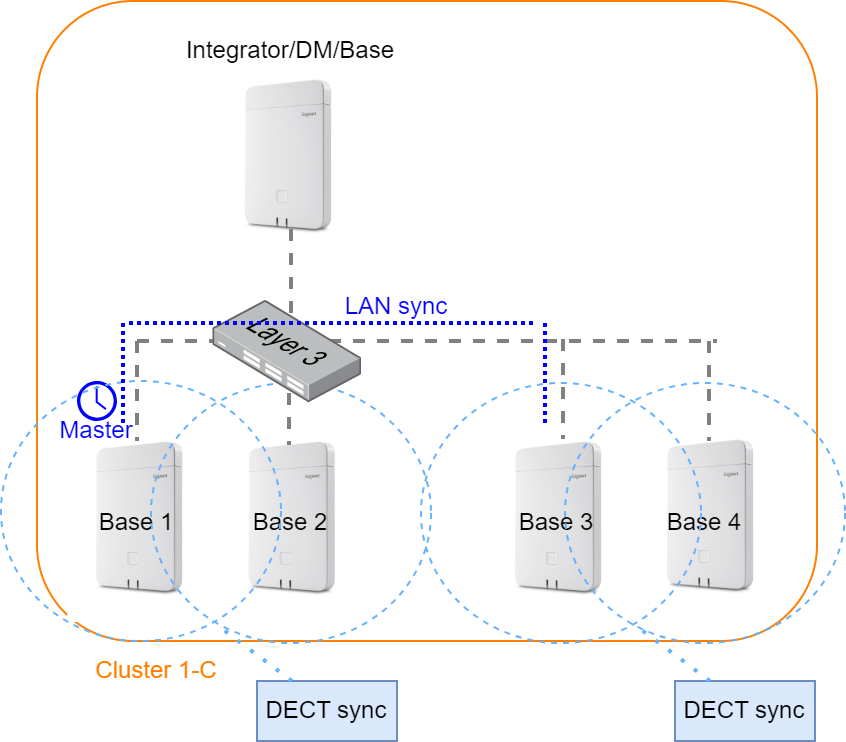
DECT-LAN-DECT Mixed.
Solving the blocked DECT synchronization to the DECT bases in the factory with LAN synchronization gives you the possibility to:
- Configure the DECT bases using LAN sync
- Configure the DECT bases using DECT sync
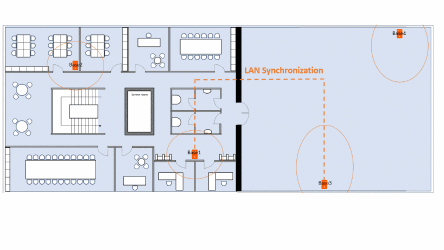
Here an example that the DECT synchronisation in the factory is using DECT sync.
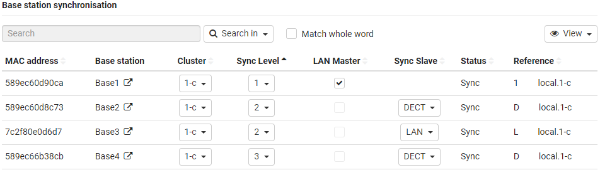
- Base 1 is the LAN master and DECT Sync level 1
- Base 2 is synchronised via DECT and has DECT sync level 2
- Base 3 is synchronised via LAN and has DECT sync level 2
- Base 4 is synchronised via DECT to Base 3 and has DECT sync level 3 (Sync level must be higher then Base 3)
DECT system configuration